


Internal and External Gutters Explained: To Convert or Not to Convert?
There are no doubt more exciting subjects to write about, but when it comes to gutters, there probably isn’t a hotter topic right now.
Here is a straightforward breakdown of how internal and external gutter systems work, where they fail, and why you might want to consider a change.
The External Gutter: Honest and Transparent
The concept of capturing and directing roof water away from buildings has been around for thousands of years. We should have completely nailed it by now, but sometimes design innovation gets in the way of common sense.
Wind the clock back 50 years, and the vast majority of homes in NZ were built with visible gutters mounted to the fascia. Today, these systems have become known as external gutters or spouting. Typically made of metal or PVC and generally not the most attractive element of a property, these gutter systems were honest and transparent by design. If they blocked or failed, rainwater would spill over the edge and fall to the ground. This highlighted an obvious problem that could then be fixed.
In extremely heavy rain, most gutter systems will reach capacity and overflow. However, because external systems are on the outside, the overspill is usually just an inconvenience rather than a cause of major damage, especially if the ground drains are working.
Hiding the Problem: Internal Gutter Systems
Around 1980, internal gutter systems took the NZ construction industry by storm, purely for aesthetic reasons. Over the next 25 years, thousands of new homes were built with their gutters hidden behind the fascia to create clean lines. In some cases, even the downpipes were hidden inside the walls. What could possibly go wrong?
Taylor Fascia and Klass Fascia were two of the most popular systems.
Just like external gutters, these hidden systems are prone to blocking if not cleaned regularly. Buildings also move, causing rooflines to sag and gutters to hold rainwater. The main issue is that when an internal gutter overflows, the water flows to the place of least resistance. Instead of falling outside, water often spills into soffits before tracking into the roof space or down the inside of a wall.
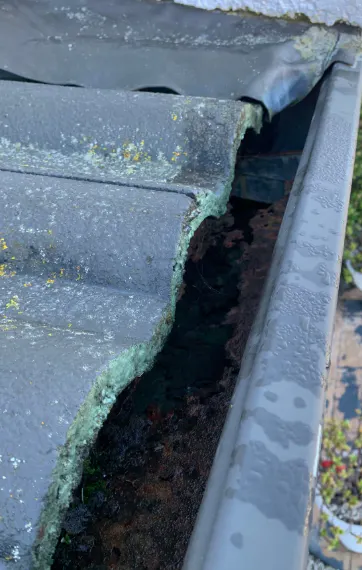
Gutter issues, whether they are internal or external by nature, can be expensive to remedy but if left unchecked, additional remedial costs can be unbearable. GutterCare® works with existing and prospective clients to protect their assets by minimising risks in this space. Reviews and advice are complimentary without obligation unless otherwise agreed prior.
A Recipe for Trouble
The design flaws of these internal gutter systems caused massive problems for homes built between the late 1980s and 2005. Wall cavities were often abandoned, meaning the external cladding was the only line of defence against water.
This was made worse for many timber frame homes built between 1992 and 2004. A change in building regulations allowed a reduction in timber treatments, making the wood less resistant to rot. In 1998, untreated pine was even approved for use in the framing of external walls. When internal gutters leaked in these homes, the damage was often severe.
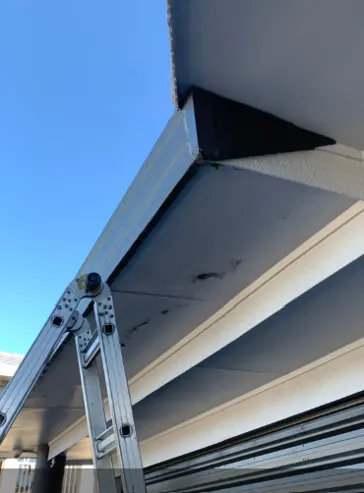
A rusted through, ‘end of life’ internal gutter system. Evidence of water penetration on soffit but where else has the water gone? It is unclear if penetration has caused damage and water might be exiting to ground through walls. Leaking might not be obvious.
GutterCare’s Advice
External gutters simply provide a better rainwater management solution. It makes perfect sense to keep water on the outside of a building.
For full peace of mind, we recommend converting internal systems to external gutters. Making this change will:
- Eliminate the risk of water getting inside and causing damage.
- Increase your property value by removing the stigma of internal gutters.
- Modernise and improve the look of the home.
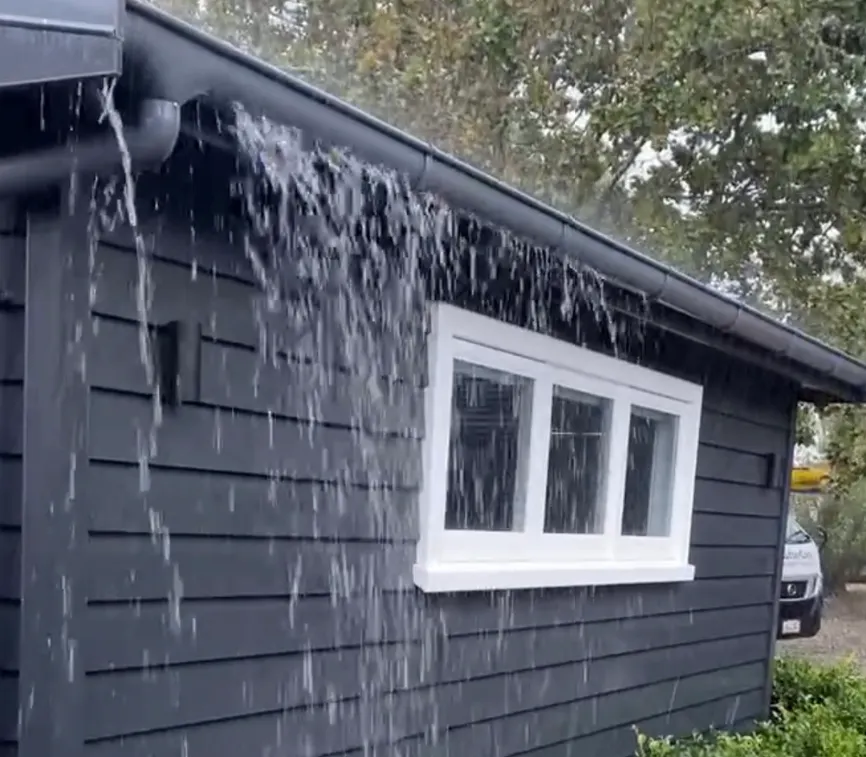
An overflowing external gutter system in heavy rain. This one was partially blocked by leaves. An obvious blockage and call to action. No resulting damage. Easily cleared.
If you choose to keep an internal gutter system, regular cleaning and routine maintenance are essential. Make sure overflows are fitted, as many older systems do not have them.
In many cases, these older internal gutters have now rusted or degraded to a point where replacement is the only option. If budgets permit, we do not recommend replacing an internal gutter system with another internal one. Converting to an external system is the only sensible choice.
Gutter issues can be expensive to fix, but if left unchecked, the resulting damage can be unbearable. GutterCare® works with property owners to protect their assets by minimising these risks. Reviews and advice are complimentary and carry no obligation.
NOW HOW SIMPLE AND HOW GOOD IS THAT?
“I really appreciate the work done by GutterCare; professional, efficient, and completed to a high standard. Communication was...”
— Sione Sione

“Contacted GutterCare about several issues with our system and team has managed to do our job on a two-storey house extremely ...”
— Nikolai Vakhroushev
“Very pleased with the GutterCare's skills; there was no need to replace any gutter or down-pipe, they only did repair the lea...”
— Anna Dubbelt
“Many thanks for job well done your staff arrived when they said they were going to - quickly got on and done the job and tidi...”
— Trinda Jackson
“I have used these guys twice now for my rental property and I highly recommend them. They communicate well, turn up on time, ...”
— Judy Cruickshank
“Very satisfied. Excellent service and communication. Care was taken for surrounding structures ensuring good safety standards...”
— Isobel Woodland